It's been a very rainy or very cold Winter in 2019. Thus, I've hardly geocached at all. My reading has slipped as well and many times those trips and books inspire or reveal some new topic I'd like to know more about and share in a Gehio post.
I did take an AncestryDNA test in December 2018 and I'll have a post about that soon since it is related to my Ohio history. On a similar note, I have a short bio I've been working on for a post about my maternal great grandfather's emigration to Ohio from Germany in the mid 19th century, and the trials and tribulations he endured.
I'm looking forward to nicer weather and new historical adventures!
Wednesday, March 20, 2019

Sunday, December 23, 2018
A Very Ge-hi-Ho-Ho-Ho Christmas
 |
| Christmas at Gehio Headquarters |
The first Christians didn't celebrate Christmas at all and it was about 400 years before we see any evidence that they did. And when they finally did it was mainly to replace the last traces of pagan worship practices in the Holy Roman Empire.
The first Christmas in America at Plymouth on December 25, 1620, went unobserved. "Foolstide" as they called it, was considered by these non-Catholics as sinful, immoral, wasteful and pagan in origin with no Biblical basis and was thus banned. Many Protestant groups in the US and Britain disapproved of any celebration of Christmas which was punishable by fines in those days.
Throughout the 18th century, Christmas was celebrated or not in the US in various ways depending on your ethnic background and geographic location but was still not that big of a deal. Easter was where it was at.
In 1820, the American author Washington Irving published the popular book "The Sketch Book of Geoffrey Crayon, Gent.". It was a collection of essays notable for "Rip Van Winkle" and "The Legend of Sleepy Hollow" but also included five Christmas themed stories which depicted long abandoned English festival traditions supposedly dating back to medieval times. Then there was the popular Clement Moore 1823 poem "A Visit From St. Nicholas" aka "'Twas the Night Before Christmas" which borrowed from Irving and help popularize Santa Claus.
However, the modern notion of "traditional" Christmas took hold in the Victorian era after the English author Charles Dickens published the popular goodwill story "A Christmas Carol" in 1843 and revived some of the same old holiday traditions. Dickens cites Irving's stories as an influence. Americans also adopted some of these practices after having shunned all things English for many years after the American Revolution. Christmas was more or less a second-rate holiday in England prior to Dickens and Dickens' book wasn't in wide circulation in the US until after the American Civil War. Easter was still the main event in the Christian religion at that time. Christmas Day didn't even become a US Federal holiday until 1870. That was about 1,520 years after Rome did.
 |
| At the "first" church Christmas Tree sign |
A local newspaper called this Christmas tree "a nonsensical, asinine, moronic absurdity." It editorialized against "these Lutherans . . . worshiping a tree . . . groveling before a shrub" Worse, it recommended that the good Christian citizens of Cleveland ostracize, shun and refuse to do business with anyone "who tolerates such heathenish, idolatrous practices in his church."
"A tree in the chancel?" roared an indignant man. "What kind of a minister are you?". So they basically called for a boycott because they were offended by differing views. Some things never change. keep in mind that this part of the 19th century was an era of violent anti-German sentiment, especially in Ohio.
 |
| Obligatory Cleveland Christmas stop |
I'm definitely not trying to be a humbug here. Celebrate Christmas how you want. Secular or religious or a combination of both. Say "Happy Holidays" or "Merry Christmas". Sing "Silent Night" or "Jingle Bells". Write Xmas or Christmas (it's the same thing, see above). Go to church on Christmas morning and/or open presents from Santa. Or don't do anything. If you are going to complain about the secularization of modern Christmas, blame Irving and Dickens. Their beloved 19th-century stories not unlike most popular 20th-century Christmas movies such as A Christmas Story or the Grinch aren't anything about the birth of Christ and are more about giving, hope, and redemption...and sometimes ghosts and good food.
Saturday, October 27, 2018
The Great Big WHH Presentation!

My writing and research energy over the past two months was being used for a presentation I mentioned here before. In May 2018, I was recommended by my friend Mark Fischer to Meg Riestenberg to give a talk to a local nature conservation group Meg belongs to in Lawrenceburg IN called the Oxbow. Mark had given previous talks here on Geocaching and the 2017 Solar Eclipse. I'd never done anything like this before but after some trepidation, I accepted as I felt I was up to the challenge.
 This was more of a nature interest group but Meg said they enjoy hearing about local history too. A captive audience! The idea I came up with for them was "Tippecanoe and Trivia Too!". This would be a talk about the local ties that William Henry Harrison had to the Ohio Valley. I also decided to bust some of the myths that surround his life. To keep folks engaged, I added in a mini trivia night similar to the ones that are popular in many bars nowadays. I decided that the winning team would get the theme appropriate gift of a six-pack of Cincinnati made Hard Cider from March First Brewing.
 |
| one of the team bookmarks |
On the evening of the presentation on October 9th, we arrived a bit early and found no one there yet. What are two geocachers going to do to kill time? Hmmm. Once we grabbed a couple of caches, one with a spectacular view of the Ohio River I must say, we headed back to the Lawrenceburg conference room and I got all set up. After some Oxbow updates by Jon Seymour and Meg Riestenberg and an introduction by Mark, I gave my presentation.
 |
| A 1960s reproduction of a 19th booze bottle with the WHH Pez and the trivia team/bookmarks by Mark. Presenter selfie with a couple of candid shots from the evening. |
There were about 40 people in attendance (a full house!) for my one-hour presentation which was only 45 minutes short of Harrison's speech. On trivia nights they usually play a song while the teams ponder their answer. I had one technical glitch in that I had no audio for the first two trivia question songs. That was a pretty major component of the entertainment factor so that was a bit distressing. Three songs were renditions of 1840 era campaign songs by a man named Oscar Brand. Another was a W.H. Harrison inspired song by a band called The Executive Branch, and the fifth was a version of "Tippecanoe and Tyler Too" by They Might Be Giants. I finally got the sound figured out and I was pretty pleased with how it all went after that. The audience seemed receptive and engaged. They even laughed at my jokes. One where I said I was going to now read the two-hour speech but was told I didn't have time. My "parley animal" joke went over pretty well too. They even had a few of their own. For example, when it got misconstrued that the trivia answers would be based on something I said, similar to a quiz, I corrected this by saying they would be mainly multiple choice or true/false questions on something I hadn't covered yet. Someone then shouted, "so we really don't have to pay attention then??". That got a good chuckle from everyone including myself.
 |
| NWA inspired graphic |
I had thought of recording my presentation but decided against it so I have no video to show you here. My PowerPoint isn't really suitable for sharing either as it is mostly image based and I relied on my notes vs having so much text on the screen. I can share a few highlights though!
Several of the big myths I busted are written about on this very blog. The circumstances and cause of his death, the confusion surrounding the first photo of a President, and the popularizing of the word booze. I added a bit about the alleged death curse on US Presidents starting with Harrison sometimes attributed to Tecumseh and other times to his brother The Prophet. For local history, I highlighted the two homes in North Bend and talked about his time as a public servant in Ohio and Indiana and of course his military history in the vicinity during the late 18th and early 19th centuries.
It turns out that my trivia questions were harder than I anticipated. This was my fault due to some red herrings I added since I thought the questions might be too easy. Here is a sample of the questions...Do you know the answers? No Googling!
 |
 |
 |
Afterward, several folks stuck around to chit chat with me. I learned of a few other local Harrison tidbits from a couple of attendees that I'll likely explore further. This was a pretty great experience for someone like me with almost no experience at public speaking. I have to highly recommend the book that helped me out a great deal in preparing for this called, Speak Easy by Maggie Eyre.
Huzzah!...as Harrison might say.
Tuesday, July 31, 2018
Yo! Pigman!

"They're probably creating a whole army of pig-warriors!"
- Cosmo Kramer, in Seinfeld: "The Bris"
After the obligatory Seinfeld references were made, I snapped a pic of Jesse Pigman's grave marker because I noted he was a very young Revolutionary War veteran and thought I'd look up this Pigman warrior later. Incidentally, we were on our way to Connersville Indiana when we stopped at the Mount Garrison cemetery for a geocache find. We would later learn that this nearby community has a gigantic drug problem, mainly methamphetamine and heroin. So, I found it interesting that when I was researching, I kept getting hits on Jesse Pinkman from Breaking Bad. Hmmm.
“Yo! What good is being an outlaw when you have responsibilities?”
- Jesse Pinkman in Breaking Bad: "Kafkaesque"
We saw several other Pigman's that day. Twenty are buried in the same cemetery with Jesse. I was getting confused in my online searches because there are two Jesse Pigman's. It turns out they were father and son but there aren't many online records for either. I did, however, uncover some interesting things.
 |
| The almost great state of Westylvania |
Both Jesse's along with other Pigman's are listed on the petition for the proposed 14th state of Westsylvania right after the war. If successful, this state would have been carved mostly out of Virginia and Pennsylvania essentially where West Virginia is now. This would have been the first US state after the original 13 colonies. Take that Vermont! Their chief complaint? The distant government was too far removed to protect them and understand their needs. The Westsylvanian dream was short lived as the newly formed US Congress never even voted on it. A prominent Federalist named Hugh Brackenridge got the Pennsylvania Assembly to squash the idea by declaring such independence talk treasonous and punishable by death. Didn't we just finish a war over something similar?
A little more background to the proposed state. Prior to the big war of independence against Britain, the settlers along with the help of Ben Franklin tried to have that area become the 14th colony called Vandalia but it was rejected by the British Crown. The irony gets thicker. Two attempts at separation. But wait, there's more!
A third and final attempt at secession occurred in 1863 when its pro-Union residents separated successfully from Virginia to form West Virginia during the Civil War. Yo, they really seem to have secession fever in their blood!
Back to Jesse Pinkman, er Pigman. He was married at least one time to Luren Newland and had six children. Lurene died in 1805 I am assuming in or after the birth of Rachael who was born that year. We are reminded again of how hard life was back then. With Jesse being only 40 years old and having several young children to care for, I would expect that he married again but I found no record of a second marriage.
He wrote about his military service in his pension application in 1844 at the age of 79. There is a Q&A section along with witness testimony. From this, I learned he mostly fought Indians in the Wheeling area under his father Captain Jesse Pigman beginning in March 1780 when he was drafted as a 15 year old Private. After 6 months he served as an Ensign in a "spy company" under a Captian Joseph Van Meter for just over a year until November 1781 after which he was discharged following Cornwallis' surrender at Yorktown. The Ensign rank, by the way, was discontinued in the Army in 1815 but was equivalent to a Second Lieutenant. He states in this document that he received a commision but the paperwork was lost. He admits he was illiterate at the time but recollects it was signed by Governor Patrick Henry. Yes, that one. Per the Pension Act of 1832 veterans who served less than two years could apply for pensions at half their pay. He applied for his pension in 1834 but it was rejected for insufficient information. I wasn't able to determine if his 1844 application was successful but he died eight years later in 1852. Ensigns earned about $10 per month in the war so he would have been applying for half that which is roughly $80 today. We seem to have a history of taking veterans for granted.
Other notable burials at Mount Garrison Cemetery include English born Reverend Robert Worster (1729-1830), a Methodist Episcopal minister who allegedly preached the first sermon west of the Alleghenies and lived to 101 years old. Quite an accomplishment then and even now.
Other veterans include Revolutionary War soldiers, Amos Milner (1759-1851), Harrod Newland (1766-1848), War of 1812 veteran, Adam Pigman (1789-1876) and Civil War veterans James W Nuxum and Francis Marion.
Oh by the way. Do you know how we learned Connersville Indiana has a big drug problem? When Mark and I were geocaching, at one stop we were visited by three police cruisers. After the officer snatched up the geocache from its hiding spot and inspected it, we explained, "It's ok we are geocachers!" He had heard of geocaching so after he ran our IDs, he rolled up the log and put it back, we had a short congenial chat and we were on our way. All good. That afternoon, we were also visited by a concerned citizen who also mentioned the drug problem. Then we are positive we were photographed at another location. Jesse Pinkman wouldn't have lasted a day in this town.
- Jesse Pigman listing on the Roster of Soldiers and Patriots of the American Revolution Buried in Indiana, page 292
Wednesday, June 27, 2018
Review: The Wright Brothers
Gehio is 7 years old today. Here's a short book review of one of my favorite authors!
 The Wright Brothers by David McCullough
My rating: 5 of 5 stars
I opted for the audiobook in 2016 because what more could I want? It's David McCullough reading a David McCullough book! Bonus: It tells the story of two great Ohioans whose name is familiar to many. I happened to be driving to Dayton during part of this and it made it all that much better seeing all the Wright references.
One thing I came away with about this book had nothing to do with airplanes. It was the technological jump made by the safety bicycle (vs the cumbersome penny-farthing). For the first time, people could travel great distances without the need of much money or expertise. It was a huge technological jump that often gets overlooked.
What's fascinating about the invention of powered sustainable air flight is the fact that so many people who had heard of all the dismal failures thought this was simply unobtainable and the Wright Brothers were big fat liars. In fact, a beekeepers magazine was the only periodical to run a story about the Huffman Praire flights near Dayton in 1904.
It is also so amazing that Orville lived until 1948 through bicycles to simple powered flight and finally seeing jet engines and the breaking of the sound barrier. Wilbur died in 1912 of typhoid.
McCullough's voice is sounding his age a bit but as usual, another great work from a great historian.
View all my reviews
The Wright Brothers by David McCulloughMy rating: 5 of 5 stars
I opted for the audiobook in 2016 because what more could I want? It's David McCullough reading a David McCullough book! Bonus: It tells the story of two great Ohioans whose name is familiar to many. I happened to be driving to Dayton during part of this and it made it all that much better seeing all the Wright references.
One thing I came away with about this book had nothing to do with airplanes. It was the technological jump made by the safety bicycle (vs the cumbersome penny-farthing). For the first time, people could travel great distances without the need of much money or expertise. It was a huge technological jump that often gets overlooked.
What's fascinating about the invention of powered sustainable air flight is the fact that so many people who had heard of all the dismal failures thought this was simply unobtainable and the Wright Brothers were big fat liars. In fact, a beekeepers magazine was the only periodical to run a story about the Huffman Praire flights near Dayton in 1904.
It is also so amazing that Orville lived until 1948 through bicycles to simple powered flight and finally seeing jet engines and the breaking of the sound barrier. Wilbur died in 1912 of typhoid.
McCullough's voice is sounding his age a bit but as usual, another great work from a great historian.
View all my reviews
Friday, May 25, 2018
Oxbows, Books, and Geocaches
 Thanks to the person who got me into geocaching, Mark Fischer, I was invited to speak at the Oxbow Tuesday Lecture on October 9th to discuss a local history subject of my choosing. The Oxbow is a wildlife conservation group in SE Indiana. Mark recently did a lecture on Geocaching which I attended. My name got mentioned as a local early area history expert for possible upcoming topics. I haven’t firmed up my material yet but it will be in some way shape or form about William Henry Harrison regarding some myths and legends about his life and ties to the area. I'm going to have to brush up on some public speaking skills!
I also picked up an interesting old title called The Intimate Letters of John Cleves Symmes and His Family. I've seen reference to this early 20th-century book many times where Cleves is mentioned. Don't get too excited. These aren't like the Harding letters. "Intimate" in this case just means "personal". No extensive bio of this important man to the history of the Ohio Valley exists due to most of his letters and journals being burned in a fire. Some say it was arson. There were many lawsuits against the man due to his questionable land business dealings. The letters that do exist were compiled here from some of his recipient's collections that survived. It sort of humanizes a person that tends to be just a static character in the story of others without any idea of his personal thoughts. One weird thing I learned. Cleves kept referring to a daughter he called "Nancy". He only had one daughter named "Anna" (who married William Henry Harrison) so that was confusing. It turns out "Nancy" was originally a nickname for "Anna". I never knew that.
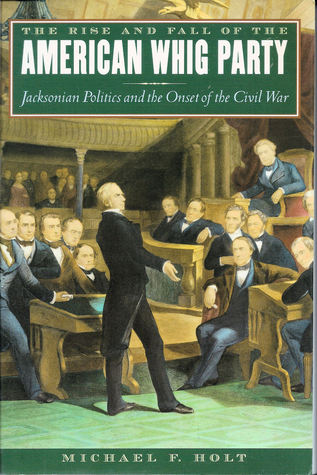
I got this and the Whigs Tecumseh from AbeBooks for just a few dollars each with free shipping. Ironically I've learned this has been owned by Amazon since 2008 but Amazon's used prices were very high for each of these. I'll be shopping there more often for good used book deals!

Speaking of geocaching, the reason so many new caches are getting published around town and my reading has slowed is that a major Geocaching event called GeoWoodstock 2018 will be held May 26th, 2018 at Coney Island in Cincinnati. This event is expected to bring over 5000 geocachers from all over the world. In fact, a geocacher from France contacted me about carpooling from their Airbnb since I have a cache near the event. I had to politely decline as I don’t really know my full schedule for that day, but I will be attending! How could I not be with "my people" that day?
 In personal geocaching news, I'm currently sitting at find 6,408 and have had some interesting cache runs lately. Lot’s of new FTF’s (First To Finds), including a Wherigo (a first FTF of this type if you will). That makes FTF 101 for me. Mark Fisher and I hit not one or two, but three “tunnel” caches in so many weeks. These are caches where you go into a large drainage tunnel, usually with a flashlight. The photo to the left is (eventually) 400' into a tunnel and about that many feet below I-74. I used to be pretty adverse to doing these. In one of them, I was ankle deep in water. Those were some fun adventures!
See you in June!
Sunday, April 29, 2018
Fine Young Cannibals
 |
| no mention of the cannibalism |
I scooped up a random book last month called The First Frontier by Scott Weidensaul. It promised “The Forgotten History of Struggle, Savagery, and Endurance in Early America”. That sounded like something for me to chew on! It turned out to be a marinade of forgotten American history through the mid-1700s. It contained all sorts of interesting morsels I didn’t know about. This post is about one of the more savory ingredients.

Needless to say, this steamed the French who feared the idea would boil over into bands of other Miami and they would slowly lose control of New France to the British. Tensions were simmering to a boil. Eventually, a full course attack was ordered on Old Briton's village. On June 21st, 1752 the village was attacked by a blended force of pro-French Ottawa, French Canadians, and Ojibwa led by Charles Langlade, a French/Ottawa fur trader. Cheddar-heads may know this name from local history class as "The Father of Wisconsin".
 |
| photos courtesy of remarkableohio.com because mine are terrible |
That's it.
They left out the spicy part.
As it turns out, Old Briton was ritually cannibalized in front of the survivors. Yep. They boiled him in a pot and gobbled him up. No mention of a side dish.
Unfortunately, I was unable to drum up any more bits about this post-battle dinner party because the primary source does not offer any. As it turns out two of the six English that were taken prisoner, Thomas Burney and Andrew McBryer, two English traders who were hidden during the attack told what happened at Pickawillany to Captain William Trent (the founder of Trenton NJ). He, in turn, wrote to Governor Dinwiddie of colonial Virginia on July 6th, 1752:
"They killed one Englishman and took six prisoners, one Mingoe and one Shawanees killed, and three Twightwees (an alternate term used then for the Miami); one of them, the old Pianguisha (Memeskia's Miami band) king, called by the English Old Britain, who, for his attachment to the English, they boiled, and eat him all up. "
There is also an August 1752 letter from the Miami that formerly resided at Pickawillany delivered by Burney to the Governor of Pennsylvania, still asserting their allegiance to the English. It said in part, "Brother Onas*...we saw our great Piankashaw King taken, killed, and eaten within a hundred yards of the fort before our faces".
 |
| 1592 depiction of Indian cannibalism |
You may have noticed that Burney is connected with the only two written records of this account. In fact, most of what we know about the battle was from Burney.
Keep in mind that nearly all Indians were illiterate and many whites were at that time too, so we rely on literate white men for these written accounts. It's possible the cannibalism never occurred at all and was invented by Burney to drum up revenge against the dreaded French and their "savage" Indian allies. Military leaders were also known to inflate the size of the enemy in their reports. While Burney surely met with the Miami for the letter that was delivered later, he may have added on the gruesome story there as well. As an English trader with his livelihood at stake, this would surely be a motive. There are no written records from the only other white survivor, Andrew McBryer who died later in 1752. I have also found no specific recollections by any surviving Miami told to anyone else either way.
As far as plausibility, I'd heard of Indians consuming the hearts of freshly killed enemies to ingest the courage of the victim, in fact, this supposedly did happen to one of the other English traders here. But as far as I know, full on cannibalism was fairly uncommon and taboo among most American Indians. It did supposedly occur among the Iroquois and some Ojibwa bands. There were definitely Ojibwa in Langlade's force.
Food for thought.
Oof. You've noticed all the other culinary references in this post too right?
One wonders why the Ohio Historical Connection would leave out one of the most intriguing and sensational aspects of this battle on the sign? Maybe they felt there was not enough evidence to warrant its mention. But again Burney's account is the only one. Maybe Memeskia was simply killed during the battle versus "executed". No wonder many find history dull and boring. I think it's worth a mention as "alleged" or plausible. To think! Ritualized cannibalism right here in Ohio (possibly)! Wow! Teach that in a history class (or a sign) and folks might actually pay attention.
*a friendly term originally used by the Iroquois for William Penn extended to the current Governor. Onas means feather or quill.
additional reading and references:
American Indian Leaders: Studies in Diversity by R. David Edmunds
The Miami Indians of Indiana: A Persistent People, 1654-1994 by Stewart Rafert
Journal of Captain William Trent from Logstown to Pickawillany, A.D. 1752
Tuesday, March 27, 2018
Clarks, Corblys, Suttons, and Cold Plagues
 |
| Clough Cemetery in 2011, Gerard is the tall one |
I'd been aware of a nearby graveyard known as the Clough Baptist Cemetery (AKA Newton Cemetery and Wagon Train Cemetery) for a while thanks to geocaching. It's quite hidden away on quiet Bridges Road and nearly in someone's yard. The bulletin board at the front notes that several Revolutionary War Veterans are buried here and lists their names. That sort of thing always gets my attention.
 |
| Sutton's 1795 Log Home in 2011 (but not his SUV or DirectTV dish) |
Another is Stephen Sutton, one of the founders of Mt Washington in 1795. Sutton Road would be familiar to anyone in this area. Sutton's log house is still standing. But it's not like the aforementioned historic looking Miller-Leuser Log House. This is a private residence in the middle of a neighborhood with additions and siding added to it over the years making it a 3 bedroom home. Fortunately, in recent years an attempt has been made to make it look more...historic.
Then there is James Clark. It is believed he was a drummer boy at the 1781 Battle of Yorktown at age 16. I hadn't given this much thought until I tried to dig up more info on this guy. No pun intended. I ended up stumbling across a document buried in the website of...the Greenfield Plant Farm.
I'm sure you guessed it by now.
 |
| 1802 Clark Stone House in 2009 - source |
The Baptist church that once stood adjacent to these folks final resting place was founded by Rev. John Corbly Jr, another name local residents will be familiar with due to Corbly Road. In fact, as Hunley (formerly Leuser) crosses Clough it becomes Corbly. As Corbly Road runs West it bends south and becomes Sutton Road toward the Ohio River. Rev. Corbly died in 1814 at age 46 of what was called cold plague, a new strain of influenza ravaging the US during the War of 1812 and characterized by severe shivering. They say you rapidly froze to death, hence the name. He and other members of the Corbly family are also interred here. The church was unused by 1905. The walls and roof collapsed in the 1930s. Most of the remaining stones were used to build a Methodist church on Kellogg Road in the 1950s.
As for the cemetery itself. Most of the stones are illegible, falling over or buried now. Anderson Township does it's best to keep it looking nice. I tried to get some updated photos for this post but Cincinnati weather in March was not cooperating.
Friday, February 9, 2018
Wishing (If I Had a Photograph of WHH)
 |
| not the 1841 photo or the 1850 copy you think it is |
I've been looking so long at these pictures of you
That I almost believe that they're real - The Cure
A daguerreotype (an early form of photography introduced in 1839) WAS in fact taken of the new President at the US Capitol on inauguration day March 4, 1841. According to the photographer Justus F. Moore, President Harrison was “delighted with the results.” We'll have to take his word on that since it was never seen again and no known copy exists. The image often implied and misreported to be an 1850 photographic copy of that lost image is likely a daguerreotype made by Albert Southworth of an oil portrait by Albert Gallatin Hoit that Harrison sat for in 1840.
One might wonder, perhaps the painting was done from the photo? Good question!...but according to a Salmon P Chase diary entry, Hoit (sometimes spelled Hoyt) traveled from Boston to North Bend OH in May 1840 to paint this portrait of Harrison, then a candidate for President, for the Boston Whig Association.
I have seen the digital version of the painting and the 1850 photo previously and while it occurred to me they are very similar it hadn't dawned on me that they are basically the same image. Everything seems to match up. The photo seems to be tilted a bit counterclockwise from the original. and the early crude photographic process adds some slight variances. Just like an Instagram filter, it also produces some shadowing and contrast changes which give the daguerreotype a more life-like three-dimensional appearance. It's no wonder this myth came to be. It looks very much like a photo and not a photo of a painting. Other engravings were also based on the painting such as this one.
Every picture tells a story, don't it? - Rod Stewart
 |
| the 1840 Hoit painting used for the photo |
So alas, while Harrison does indeed get the honor to be the first President to be photographed in while in office, no one has seen it since 1841 and what we often see credited as an 1850 copy of that photo is an 1850 photo of an 1840 painting.
Sorry to break the news on William Henry Harrison' s 245th birthday, born on this day 1773. President's Day is on the 3rd Monday of February. Did you know only four US Presidents were born in February? Washington, Harrison, Lincoln, and Reagan.
In case you are wondering, the oldest surviving original photo of a sitting US President is that of James Polk from 1849. The oldest surviving photograph of a US President, recently discovered, is that of elderly John Quincy Adams taken in 1843, well after his time in office.
If I had a photograph of you
It's something to remind me
I wouldn't spend my life just wishing - Flock of Seagulls
The Hoit portrait image was taken from a general internet image search also resized and cropped by me for comparison purposes. The original painting and image can be seen at the Smithsonian National Portrait Gallery.
Wednesday, January 10, 2018
Greene Day
 |
| working copy in Greenville |
The 20th-century painter Howard Chandler Christy was born on January 10th 1872 in Morgan County Ohio east of Columbus. I'm not going to go into a biography of him, you can look to Wikipedia for that, but you are familiar with his work and don't know it. Christy's most famous painting is a depiction of the Signing of the US Constitution which has been reproduced in countless history books and publications. He has many other notable works but the one I want to focus on here is his 1945 Signing of the Treaty of Greene Ville, or simply, The Signing. Christy, a native Ohioan, was commissioned for the work to commemorate the 150th anniversary of the treaty which technically ended the Northwest Indian Wars and formed most of the future state of Ohio. Again this post is mostly about the painting and not Christy, the preceding events, or the treaty itself.
 |
| the final in Columbus |
I'd originally seen the painting in person at the Garst Museum in Greenville Ohio (formerly known as Greene Ville) but I was a bit confused as it didn't look exactly like the one I'd seen in print. Then I learned the "real" painting was located in the Ohio Statehouse. I thought maybe the one in the museum was a reproduction. It turns out that there are two versions of the artwork. The painting above the fireplace in the Garst Museum is what is known as the working copy, which is basically a practice version. The painting in the Ohio Statehouse Rotunda stairway is the final version. Both were painted by Christy and there are a few obvious differences. Don't let the difference in colors in my examples fool you. That isn't really an accurate representation. Both are pretty muted when you see them in person.
The working copy measures 6' x 7' whereas the final is a whopping 22' x 17' and the largest painting exhibited in the Ohio Statehouse. I got to lay my eyes on the final when I visited Columbus last month.
The central figures are Little Turtle (Miami) on the left with outstretched arms presenting the wampum, interpreter William Wells in the center, and General Mad Anthony Wayne to the right. On each side are various individuals representing Indian and American figures that signed the treaty. In the background of the Indian side, we see Fort Greene Ville. The council house appears behind the Americans.
The central figures are Little Turtle (Miami) on the left with outstretched arms presenting the wampum, interpreter William Wells in the center, and General Mad Anthony Wayne to the right. On each side are various individuals representing Indian and American figures that signed the treaty. In the background of the Indian side, we see Fort Greene Ville. The council house appears behind the Americans.
 |
| a couple of areas of key differences |
Several individuals have slightly different appearances in the two paintings. The one I noticed right away is with 22-year-old William Henry Harrison, aide de camp to General Wayne. It's probably the best way to tell the difference between the two versions in print. Harrison is standing behind the General and one person over to his left. In the working copy, he looks straight ahead, breaking the 4th wall of the scene. He doesn't resemble Harrison much and has bright ruddy cheeks. In the final, we see him facing to his right and toward Wayne and looking much like the Rembrandt Peale painting of him from 1813. Chaplain David Jones is standing immediately to Harrison's left and whispering to him in the working copy. Perhaps he has some divine knowledge and is saying to Harrison, "when you give your inaugural address in 46 years don't forget to wear your hat and coat". Jones is seated away from the future President in the final and not whispering to him. Perhaps that explains why things turned out the way they did with Harrison.
Lieutenant William Clark (of later Lewis and Clark fame) stands to the right of Harrison and looks more toward his left in the final. Meriwether Lewis is there too by the way. He is behind The Sun (Potawatomi) signing the treaty at the table. It's not that noticeable of a difference but it gives me an excuse to mention that this is where the duo met.
 Black Hoof (Shawnee) and Bad Bird (Chippewa), in the foreground to the left and right of standing Little Turtle (Miami), appear to have mohawks in the working copy and instead have horns and feathers adorning their hair in the final.
The treaty itself has had markings added to it in the final.
As I researched this work I came across an interpretation of the painting that felt the scene represented the growth of civilization. For example, as we move from left to right, we have half naked crouching Indians while Little Turtle stands. In the shadowy center, there is William Wells, a white captive raised by the Miami, who went back and forth between the two societies. Wells served as the interpreter here. He was also married to Little Turtle's daughter. So that's his father in law to his right. Further right in the scene, we see well dressed and seated men with literate scribes representing civilization. I think it's a good theory whether Christy intended it or not.
 |
| granite version in Greenville |
This painting, like the Signing of the Constitution painting, is a romanticized scene and the events took place over a period of time. In Greeneville's case, these negotiations occurred over the first eight months of 1795 and then signed by representatives on August 3rd. So it is possible that many of the men depicted here were never present together and certainly not like this.
Incidentally, there is a less idealized contemporary oil painting of the 1795 events that was created by an unknown artist but believed to be one of Wayne's officers present at the proceedings. This one is displayed at the Chicago History Museum. This depiction is certainly much more barren than Christy's.
Happy birthday 146th birthday Howard Chandler Christy. Thanks for giving back some of your talents to represent Ohio.
Additional info:Happy birthday 146th birthday Howard Chandler Christy. Thanks for giving back some of your talents to represent Ohio.
- Christy at the unveiling
You can zoom in on these to get a better look:
- Working copy info in Garst Museum
Subscribe to:
Posts (Atom)